It’s a form of immunoassay in which the test sample flow along the PVDF membrane via capillary action. Gold nanoparticle functionalization with anti-biotin antibody was performed following the previously described protocol . Briefly, 1 mL of gold nanoparticles solution (Sigma-Aldrich, Steinhem, Germany) was adjusted to pH 9 with addition of the appropriate amount (∼25μL) of borax solution . Anti-biotin antibody (4μg; Sigma-Aldrich, Steinhem, Germany) was diluted in 200μL of borax solution and was mixed with the Au NP solution, with gradual addition by stirring (4 times × 50μL).
In contrast, S-GNP covalent immobilization of antibodies gives a more intense signal than adsorption. Digital images of the test strips were obtained with a Canon CanoScan 9000F scanner and analyzed with TotalLab software (Cleaver Scientific; Rugby, UK), as described in our previous paper .
The absence of the test line in the presence of the control line indicates a negative sample. We found that the dipstick was positive for 19 blood culture-negative patients and negative for all healthy controls as well as for all the patients with other febrile illness (Fig. 4 and Table 3).
Optimized Lfia Strips Testing With Human Sera Pools
S. Typhi O antigens include serotypes 9 and 12, often expressed on the same organism. Paratyphi A-infected patients by the dipstick assay presumably rests upon the detection of circulating lymphocytes expressing anti-serotype 12 O-antigen antibodies in these individuals. Representative DLS spectrum of gold nanoparticles showing an average diameter of 20 nm. To assess stability of the conjugate and to define the optimum pH and minimum concentration of antibody required for conjugating the colloidal gold, we used an aggregation assay (20–22). Specifically, we added 10% NaCl to the gold-protein suspension, incubated it for 10 min, and then assessed stability and polydispersity by measuring the absorbance at 520 nm, 580 nm, and 600 nm (20–22).
- This technology could be easily used for studying the contamination of food samples with rongalite.
- 30 nm and 60 nm Gold NanoSpheres also have specific advantages depending on the design and application of the lateral flow test.
- Paratyphi A accounts for up to 1 in 5 cases of enteric fever is some areas of Asia, including Bangladesh , and paratyphoid and typhoid fevers can be clinically indistinguishable .
- The SDS-PAGE analysis showed that both RSA were expressed with their predicted molecular sizes (16.7 kDa for Msg RSA and 22 kDa for Kex1 RSA) after IPTG induction and that they were successfully purified by immobilized metal-ion affinity chromatography .
- The particles are prepared by covalently attaching the tetrameric protein to the surface of the functionalized nanoparticles to facilitate excellent retention of biotin-binding activity.
The mechanism of passive adsorption is based on van der Waalsand other attractive forces between the antibody and the surface of the particle. These attractive forces between the antibody and the nanoparticle probe are reversible and strongly influenced by both the nanoparticle surface and the coupling environment.
Vertex Pays $900m Upfront To Lead Ctx001 Development With Crispr Therapeutics
The size distribution and colloidal dispersion of the synthetic GSPs were further confirmed by DLS . The results indicated that the hydrodynamic diameters of the GSPs ranged from 100 nm to 400 nm with a relatively narrow size distribution, which was consistent with the results obtained from TEM and SEM. Furthermore, all polydispersity indices of the assembled GSPs as measured by DLS were less than 0.2, ensuring their synthesis repeatability.
Utilizing our cellulose technology matured and advanced for more than 80years,we have developed patented and innovative colored nano beads NanoAct. Gold nanorods-based lateral flow biosensors for sensitive detection of nucleic acids. Such invasive nontyphoidal salmonellosis is a significant cause of mortality in malnourished and immunocompromised children, especially HIV-infected individuals in sub-Saharan Africa . Although we did not assess our dipstick assay in patients with iNTS , we are encouraged to note that both S. Enteritidis can express O antigen 12, suggesting that the current dipstick assay might be able to detect at least a subset of individuals with iNTS. Enteric fever remains an important public health concern in many developing countries. There is a very real need for a low-tech, reliable, and affordable diagnostic test that shows high sensitivity and specificity.
Thereafter, the utility of this antibody sandwich pair was confirmed in both bacteriophage and gold nanoparticle LFA. The LoD was improved 100-fold using bacteriophage nanoparticles as reporters compared to the conventional gold nanoparticle LFA. Rapid and sensitive detection of the food allergen glycinin in powdered milk using a lateral flow colloidal gold immunoassay strip test. MNPs as new labeling materials are recently used for the development of LFAs. The sensitivity can be increased up to 10 to 100 times by applying MNPs. In addition, MNPs can produce magnetic signals which keep stable over a long period of time.
Journal Of Dairy Science
Compared with small-sized AuNPs, large-sized AuNPs have stronger optical intensity, which is conducive to increasing LFIA sensitivity. Bischof et al. demonstrated that large-sized AuNPs can allow moderate improvement in the sensitivity compared with 30 nm AuNPs . Our previous study also verified that 100 nm AuNPs used as signal reporter can increase the sensitivity of competitive LFIA . However, the use of oversized AuNPs as probes in turn decreases LFIA sensitivity despite their higher molar extinction coefficient (ε) than 100 nm. On the one hand, when the target concentration approaches the limit of detection , each AuNP probe usually combines one or several analytes because the AuNP probe content is far higher than that of the analyte. Therefore, the complex of large-sized AuNPs and analyte should embody a weak binding affinity to captured antibodies at the T line because of the low diffusivity of large-sized AuNPs on the nitrocellulose membrane, thereby causing poor LFIA sensitivity . On the other hand, the extinction efficiencies of AuNPs consists of the adsorption efficiencies and the scattering efficiencies .
Thus, a rapidly increasing localized surface plasmon resonance signal of large AuNPs ensures enhanced sensitivity, whereas a further increase in AuNP size decreases AuNP-LFIA sensitivity despite their exceptional Qext. In brief, large AuNPs can moderately enhance the sensitivity, whereas overlarge AuNPs reduce the sensitivity due to their stronger light scattering and lower diffusivity on the NC membrane.
Typhi isolated from a patient, using a phenol-water extraction procedure, followed by enzyme treatment with proteinase K, DNase, and RNase and ultracentrifugation as previously described . A) Antibody pair screening for the detection of Norwalk VLPs; values correspond to the absorbance for a sample for 109 VLPs offered; background absorbance for no VLP sample was subtracted (typical value ~0.1).
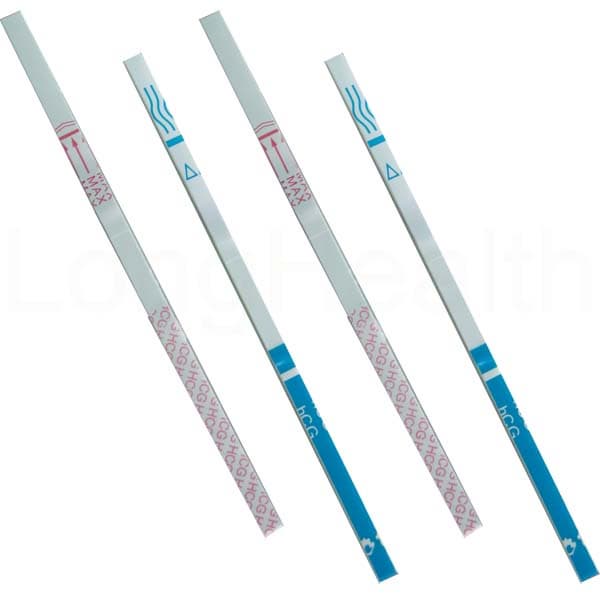
jirovecii antibodies in human sera were developed, based on AuNP-Msg and AuNP-Kex1 conjugates. Lateral flow tests, or lateral flow assays are rapid diagnostic assays that do not require any special machinery to run or provide a readout. They are simple devices that provide a glass strip cutter visual readout and is the preferred test for low-cost and/or portable applications. Typically, lateral flow test strips are composed of a sample pad, conjugate pad, reaction membrane, and absorbent pad.
Different size types of NC membranes with respective flow rates can be suitable for these assays. In this work, three commonly used NC membranes (i.e., pall 90, pall 170, and Millipore 135) purchased from Jiening Biotech Company were tested. Colloidal gold are commonly used as detector reagent in the LFA strip for visualization of signals. There are many other unique properties of gold nanoparticles such as the high chemical stability, large specific area, easy synthesis, low cost and easy preparation steps, which makes the analysis time short and provide reliable analysis on-site. While easy-to-use, relatively fast, and low-cost, conventional lateral flow tests often lack clinical sensitivity and waste significant quantities of antibodies when binding to nanoparticles. Aggregation commonly prevents full exposure of the reactive surface area during the coupling and coating steps, decreasing yield, compromising consistency and assay performance. The proposed dual biosensor format was developed by our research group and has been successfully exploited on pharmacogenetic studies for cytochrome c single nucleotide polymorphism genotyping, combined with oligonucleotide ligation reaction .